Songs I've Outgrown and the Night I Finally Stopped Performing Them
Photo: Alexboaca1, CC BY-SA 4.0, via Wikimedia Commons
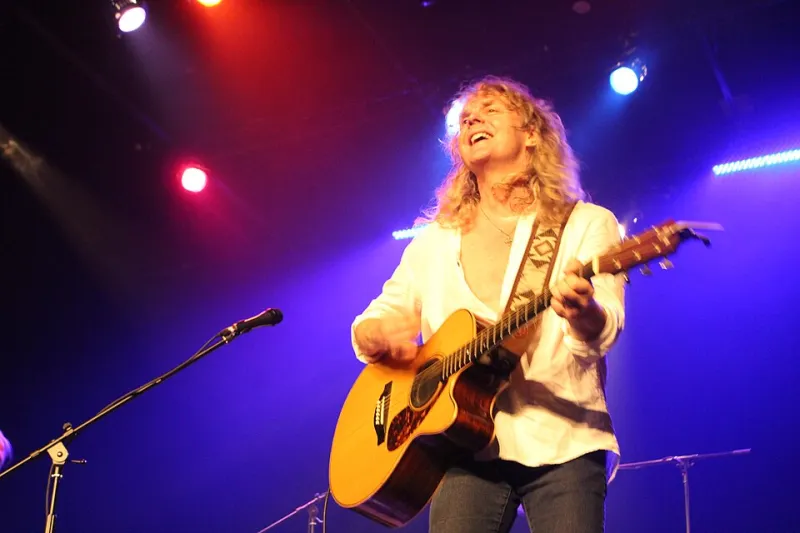
I remember the exact show. It was a Thursday night at a mid-sized venue in the Midwest, maybe seven hundred people, good energy in the room. I was about halfway through the set when I started playing the opening chords to a song I'd written years earlier—one of the ones fans always want to hear, always sing back loud, always light up for. And I felt nothing.
Not tired. Not bored exactly. Just... absent. Like I was watching someone else perform a song that used to belong to me.
I finished it. The crowd responded the way they always do. I smiled, moved on. But backstage afterward, I sat with that feeling for a long time. Something had shifted, and I couldn't pretend it hadn't.
What It Means to Outgrow a Song
Here's something nobody really talks about in the public conversation around music: artists outgrow their own work all the time. The songs that defined an earlier chapter of your life eventually stop reflecting who you are. The emotional truth that made them real when you wrote them becomes a kind of costume—something you can put on for the stage but can't quite inhabit anymore.
That's not a failure. It's actually what growth looks like. But the music industry, fan culture, and even the internal pressure artists put on themselves can make it feel like something closer to betrayal.
Fans form deep attachments to specific songs. Those tracks become part of their own stories—the breakup they got through, the summer they still think about, the road trip playlist that's been on rotation for years. When you play those songs live, you're not just performing your work. You're holding space for their memories. That's a real and meaningful thing. It's also a weight that can quietly crush the life out of a performance if you're not honest about it.
The Unspoken Rules of the Setlist
Building a setlist involves more unspoken calculation than most people realize. You're managing energy arcs, emotional pacing, crowd expectations, and your own stamina all at once. You're also making a quiet argument about who you are as an artist right now—which songs deserve the spotlight, which ones you're proud of, which ones represent the version of yourself you're currently standing in.
For a long time, I let fan expectation drive too much of that process. I'd look at the list and think: they're going to want this one. Better put it in. Better not cut that one, they'll be disappointed. The setlist became less of a creative statement and more of a customer service transaction.
The problem with that approach is that audiences feel it. Maybe not consciously, but they do. A performer who's genuinely connected to what they're playing has a different quality of presence than one who's going through the motions of a crowd-pleasing routine. You can't fake that electricity, and you can't manufacture it by playing songs you've already said everything you have to say through.
The Song I Finally Retired
The song I mentioned at the top of this piece—I'm not going to name it, and if you're a regular at my shows you might already know which one I mean—was one I wrote during a period of my life that feels genuinely far away now. It came from a specific kind of hurt, a specific relationship, a specific version of me that did what she needed to do and then moved on.
For years I kept performing it because the fans loved it and because I told myself I owed them that. But somewhere in the middle of that Thursday night set, I realized I was doing something quietly dishonest. I was presenting an emotional truth that wasn't mine anymore as if it still was. I was asking the audience to feel something with me that I wasn't actually feeling.
That felt wrong in a way I couldn't talk myself out of.
I took it off the setlist for the next show. Then the next. Nobody came to me after the show and demanded to know where it went. The set felt different—tighter, more alive, more like me right now rather than me three years ago. A few people mentioned they missed it. I appreciated that. But the overall experience of performing was more honest, and that honesty translated into something better for everyone in the room.
What Letting Go Actually Feels Like
I want to push back on the idea that retiring a song from live rotation is purely liberating. It's not, at least not at first. There's grief in it. Those songs represent real time, real feeling, real versions of yourself. Stepping back from them—even just in a live context, even with the recordings still out there—can feel like closing a door on something that mattered.
I've had moments of doubt in the middle of shows where I thought: I should just bring it back. The crowd would love it. It would be easy. And easy is not nothing when you're tired and you've got three more dates before you get a day off.
But easy and true aren't the same thing. And the longer I do this, the more I believe that the only sustainable version of a music career is one built on truth. Not perfection, not strategy, not giving people exactly what they think they want—truth. The songs I perform now are ones I can stand inside completely. That changes the whole quality of a live show in ways that I think audiences feel even when they can't articulate it.
The Catalog Is Still There
Here's the thing I remind myself on the harder nights: retiring a song from the setlist isn't erasing it. The recordings exist. The fans who love those songs can still love them. The relationship between a listener and a track doesn't require me to keep performing it forever to remain valid.
My catalog is a document of who I've been. My live show is a statement about who I am. Those two things don't have to be identical, and trying to make them identical is what leads to performances that feel like museum exhibits rather than living, breathing events.
The setlist is one of the most personal artistic decisions I make. It's not just logistics. It's a declaration. And these days, I want that declaration to be honest—even when honest means disappointing someone, even when it means letting go of something that used to be mine.
Some songs you write for a moment. Some you write for a lifetime. Learning to tell the difference is one of the most important things I've figured out about being an artist. It just took me longer than I expected to act on it.