I Used to Refresh My Stats Every Hour. Here's What That Cost Me.

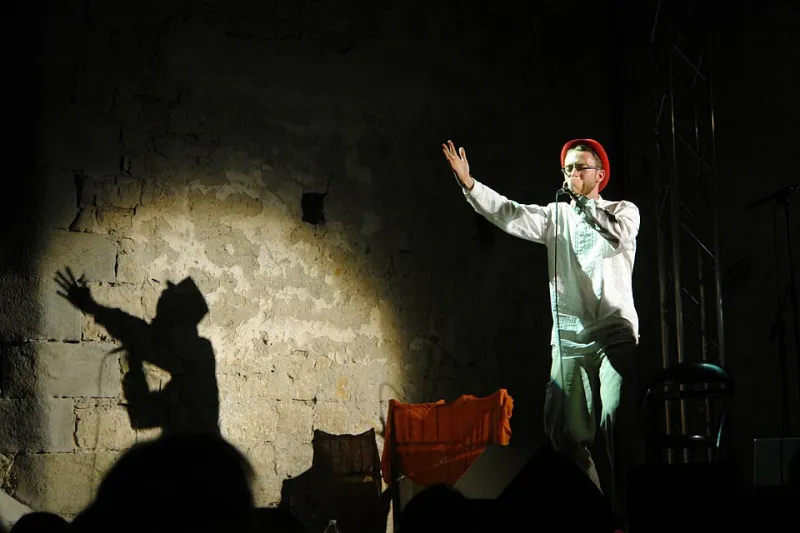
Photo: LG전자, CC BY 2.0, via Wikimedia Commons
I remember sitting in my apartment at like 11 p.m. on a Tuesday, watching the play count on a new single tick up in real time. I'd been at it for two hours. I had a notebook open on the table next to me — ostensibly to write — and I hadn't touched it once. The streaming dashboard had become the most important thing in the room.
That's when I started to suspect I had a problem.
The Dashboard As Mirror
Streaming analytics are genuinely useful tools. I want to be clear about that, because this isn't a rant against data or technology. Knowing where your listeners are geographically, which songs have the longest average listen time, what playlists are driving traffic — that information matters, especially when you're trying to figure out where to tour or how to talk to your audience.
But there's a version of analytics engagement that stops being useful pretty fast. And I slid into that version without really noticing it was happening.
It started innocently enough. I'd check numbers after a release, the way you might check your phone after sending an important text. Normal, right? Then I started checking before bed. Then first thing in the morning. Then I started comparing day-over-day numbers with a level of intensity that, in retrospect, was genuinely a little unhinged. A dip of a few hundred plays on a Wednesday afternoon could send me into a spiral about whether the song was failing, whether I'd released it wrong, whether I needed to do more promotion immediately.
The dashboard had become a mirror, and I was reading my entire self-worth in it.
What Viral Actually Means
Every artist I know has had some version of the viral moment fantasy. That one song that blows up, lands on a massive playlist, gets used in a trending video, and suddenly your monthly listener count multiplies by ten overnight. It happens. I've watched it happen to people I know. And I won't pretend I never wanted it.
But here's what I've observed, both from the outside and from my own smaller-scale experiences with songs that briefly spiked: viral moments are almost never the beginning of a sustainable career. More often, they're a stress test. The audience that arrives on the back of a trend is largely looking for the feeling the trend gave them, not for you. When the next trend comes along, they move with it.
I had a song perform significantly better than anything I'd released before — enough that I noticed a real jump in followers and streams. It felt incredible for about three weeks. Then the numbers leveled off, and a lot of those new listeners never came back. The fans who had been with me before the spike? They were still there, still engaging, still showing up. The math was humbling.
The Shift That Changed How I Write
At some point, I started asking myself a different question before finishing a song. Instead of is this the kind of thing that gets added to playlists, I started asking is this true. It sounds simple, almost embarrassingly so. But those two questions pull you in genuinely different directions.
Playlist-optimized writing has a sound. It tends toward a certain tempo range, a certain song length, a certain kind of hook that hits within the first thirty seconds. None of those things are inherently bad — some of my favorite songs check all those boxes naturally. But when you're engineering for algorithmic placement rather than emotional honesty, listeners can feel it. Maybe they can't articulate it, but the connection is thinner. The song does its job and disappears.
The songs I've written that have meant the most to my core audience — the ones people bring up when they meet me, the ones that show up in messages about hard times or big moments — are almost never the ones I thought would perform well by the numbers. They're the weird ones, the slower ones, the ones where I said something I wasn't sure I should say out loud.
Redefining What Success Looks Like
I've had to do some real mental work around what I'm actually measuring when I call something successful. It's ongoing, honestly. The pull of the dashboard doesn't fully go away just because you've intellectually decided it's not the whole picture.
But I've started building in other metrics — softer ones, harder to quantify, but more meaningful to me personally. How many people came to the last show who'd never seen me before and stayed for the whole thing? How many messages did I get about a specific lyric that landed for someone? Did I finish this song feeling like I'd said what I actually meant to say?
None of that shows up in Spotify for Artists. But all of it tells me more about whether I'm building something real.
The Long Game Nobody Talks About
The music industry loves a breakout story. The overnight success, the song that changed everything, the moment the algorithm smiled on you. Those stories are exciting, and they're not made up — they happen.
But the artists I find most inspiring, the ones whose careers have actual longevity, almost universally talk about something slower and less glamorous: a sustained, deepening relationship with an audience that trusts them. That kind of trust doesn't come from a playlist placement. It comes from showing up consistently, being honest in your work, and caring more about the room you're in than the numbers on a screen.
I still check my stats. I'm not going to pretend otherwise. But I try to check them the way you'd check the weather — useful information for planning, not a verdict on your worth. Most days, that framing holds.
And on the days it doesn't, I close the laptop and go write something true.