When 'Play That Old One' Feels Like a Trap: My Honest Take on Turning Down Fan Requests
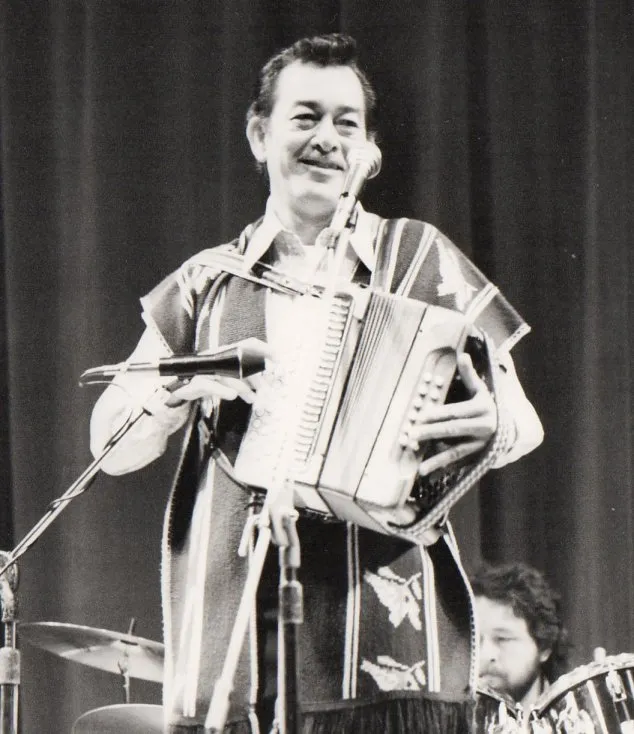
Photo: Tony 1212, CC BY-SA 4.0, via Wikimedia Commons
There's a specific kind of pressure that only exists in a live room. It's not the nerves before you step out — I've mostly made peace with those. It's the moment mid-show when someone near the front cups their hands around their mouth and yells the title of a song you quietly retired two years ago. The whole room kind of shifts. People look at you. And you have to make a decision in about three seconds flat.
I've been in that position more times than I can count. And for a long time, my answer was almost always yes. I'd pivot, dig back into muscle memory, and give the crowd what they asked for. I told myself it was generosity. Looking back, a lot of it was just fear.
The Approval Trap
Here's the thing nobody really talks about: saying yes to every request feels like connection, but it can quietly hollow out a performance. When I started leaning into older material just because someone asked — songs I'd genuinely moved past emotionally — I noticed something strange. The crowd would cheer, but I felt absent. Like I was playing a cover of myself.
There's a version of fan service that's genuinely beautiful. Knowing that a particular lyric meant something to someone on a hard night, and getting to deliver it live — that's a gift. I don't take that lightly. But there's another version that's really just people-pleasing dressed up as gratitude, and I spent a lot of early shows caught in that loop.
The approval trap is real, especially when you're building an audience. You want people to love the show. You want them to leave happy. And the fastest shortcut to a happy crowd is giving them exactly what they already know they like. The problem is that shortcuts have a way of becoming the only road you know how to take.
What the Request Is Really Asking
I've started thinking about fan requests differently. When someone asks for an old song, they're not usually being demanding — they're trying to tell me something. They're saying this mattered to me or this is how I found you or I need to feel that thing again. That's not nothing. That's actually kind of profound.
But here's what I've realized: the song isn't always the point. The feeling is the point. And if I'm doing my job right, I can deliver that feeling through the music I'm actually living in right now — without having to resurrect something I've already laid to rest.
When I explain that to audiences, even briefly, something shifts in the room. People are more generous than we give them credit for. Most of the time, if you tell them honestly where you are as an artist, they'll come with you. They just need you to make the invitation feel real.
The Songs That No Longer Fit
I have a handful of songs from earlier in my career that I'm genuinely proud of, but that I can't perform authentically anymore. Not because they're bad — some of them are among the most technically solid things I've written. But the emotional truth they were built on has changed. I've changed. And when I try to sing them now, I can feel the gap between the words and where I actually am. That gap is audible. Audiences might not be able to name it, but they feel it.
There's a difference between performing a song and inhabiting it. The best live moments I've ever had — the ones where the room goes completely still, where you can feel everyone breathing together — those only happen when I'm fully inside what I'm singing. I can't manufacture that with a song I've outgrown just because somebody asked nicely.
How I Handle It Now
I've gotten better at the in-between moments. Instead of just shaking my head or moving on awkwardly, I try to acknowledge the request with something real. Sometimes I'll say something like, "That one lives somewhere I'm not visiting right now, but stay with me" — and then go into something current that carries a similar emotional weight.
Other times, if the request is for something I genuinely might bring back one day, I'll say so. Honesty goes a long way on stage. People don't need you to be perfect; they need you to be present.
I've also started thinking more carefully about what I put on a setlist in the first place. If I know certain songs are going to get requested and I don't want to play them, I try to build a set that's so emotionally complete that there's no obvious gap where the old stuff used to live. That's harder than it sounds, but it's also made me a better live performer.
Staying True Without Shutting People Out
None of this means I don't care what my audience wants. I care deeply — maybe too deeply sometimes. But I've learned that the most respectful thing I can do for the people who show up to my shows is to give them the most honest version of where I am right now. Not a greatest hits package. Not a nostalgia act. Me, tonight, in this room, with these songs.
The requests will keep coming. I'll keep saying no to some of them. And I'll keep trying to make sure that the yes I give to every show is big enough that nobody walks out feeling shortchanged.
That's the deal I've made with myself — and honestly, with my audience too.