Borrowing Someone Else's Song to Find Your Own

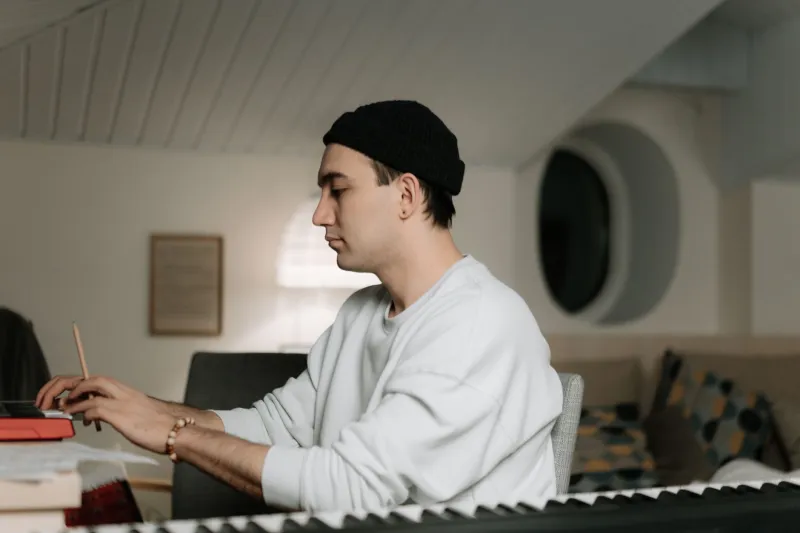
Photo: Gunawan Kartapranata, CC BY 3.0, via Wikimedia Commons
The first time I performed a cover in front of an actual audience, I was terrified in a way that felt completely backward. I hadn't written the song. I didn't have to defend the lyrics or explain the chord choices. The whole thing was already built—I just had to show up and play it. So why did it feel more exposing than anything I'd ever put out under my own name?
That question stuck with me for a long time. And working through it, slowly, across a handful of studio sessions and a lot of late-night soundchecks, taught me more about my own artistic instincts than almost anything else I've done.
The Illusion of the Easy Cover
People tend to assume covers are the low-stakes option. You already know the melody. The audience already knows what it's supposed to sound like. There's a kind of built-in safety net, right?
Wrong. Or at least, not the whole picture.
When you perform your own material, you're the authority. If something sounds unexpected, that's just your vision. Nobody can tell you it's wrong because there's no original to compare it to. But a cover comes loaded with context—the version everyone heard first, the emotional memory attached to it, the specific timbre of the original artist's voice. You're walking into a room that's already furnished, and every choice you make is going to be measured against what was already there.
That pressure is real. But it's also, weirdly, a gift.
What Honoring an Original Actually Means
I spent a long time thinking that a good cover meant staying faithful to the source material. Preserve the melody, respect the key, don't mess too much with the arrangement. Basically, be a really good tribute act.
Then I started digging into the covers I actually loved—the ones that stopped me cold when I heard them for the first time. Virtually none of them played it safe. Jeff Buckley's "Hallelujah" doesn't sound like Leonard Cohen's version. Jimi Hendrix's "All Along the Watchtower" sounds so definitively his that a lot of people don't even realize Bob Dylan wrote it first. Aretha Franklin took Otis Redding's "Respect" and turned it into something so fully her own that it became a cultural landmark in its own right.
None of those artists were trying to replicate. They were translating.
That reframing changed everything for me. Honoring the original doesn't mean copying it—it means understanding it deeply enough that you can carry its essence into a completely different vessel. And the vessel, in every case, is you.
The Moment the Cover Starts Talking Back
Here's the part nobody warns you about: somewhere in the process of really learning a song that someone else wrote, it starts to reveal things about you that you didn't know were there.
I was working through a cover a couple of years ago—a song I'd loved for a long time, something with a lot of emotional weight attached to it. I'd been singing it the same way for weeks, and it felt fine. Technically solid. Emotionally flat.
My producer stopped me mid-take and said, "Where are you in this?"
I didn't have an answer at first. But sitting with that question cracked something open. The parts of the song I'd been treating as fixed—the phrasing, the dynamics, the places where I was pulling back—those weren't the song's rules. They were my own hesitations. My instinct to not take up too much space. My habit of treating restraint as professionalism when it was actually just fear.
The cover became a mirror. And what it reflected back wasn't the original artist. It was me, in all my avoidant, over-controlled glory.
Where Your Sonic Fingerprint Shows Up
One of the most useful things about covering other people's music is that it isolates variables. When you're writing your own songs, everything is happening at once—melody, harmony, lyric, arrangement, production. It's hard to know which choices are intentional and which ones are just defaults you've never questioned.
With a cover, the raw material is fixed. So every choice you make in adapting it—the tempo you gravitate toward, the register you naturally settle into, the moments where you instinctively add a run or strip something back to bare chords—those choices are pure you. You can actually watch your own instincts operate in real time.
I started keeping notes after cover sessions. Not about the songs themselves, but about the patterns I noticed in my own interpretations. I consistently slowed things down. I consistently stripped arrangements. I consistently found myself drawn to the most ambiguous lines in a lyric and sitting inside them longer than the original did.
That's not a critique of the originals. It's a map of my own aesthetic. And it informed my original writing in ways that felt almost unfair—like I'd found a shortcut to self-knowledge that I hadn't earned through the usual painful process of just writing bad songs until the good ones showed up.
The Tension That Never Fully Resolves
I want to be honest about something, though: the tension between honoring a song and making it yours doesn't ever fully go away. And I'm not sure it should.
Every time I perform a cover, there's a moment where I feel the pull of the original—the ghost of it sitting right next to my version, watching. Sometimes that tension produces something electric. Sometimes it makes me second-guess every choice I've made. The discomfort is part of the work.
And honestly? That ongoing negotiation—between reverence and reinvention, between the song as it was and the song as you need it to be—is a pretty good metaphor for what it means to have an artistic identity at all. You're always in dialogue with what came before you. You're always deciding which parts of your influences to carry forward and which parts to leave behind.
Covers just make that conversation audible.
What I Took Back to My Own Songs
The unexpected payoff of all this wasn't the covers themselves. It was what I brought back to my original writing.
I started trusting my instincts more—specifically the ones that felt too idiosyncratic to be useful. The slowdowns. The silences. The tendency to linger. Because I'd watched those instincts operate on material that wasn't mine, and I'd seen that they weren't mistakes. They were a point of view.
Your voice isn't just the sound your vocal cords make. It's every decision you make about a song—when to push, when to hold back, what to leave in, what to cut. Covering other people's music is one of the strangest and most effective ways I've found to hear that voice clearly, because it removes the noise of your own creative ego and just lets the instincts run.
Borrow someone else's song sometime. Really borrow it—learn it the way you'd learn a language, not just the words but the grammar underneath. And then see what happens when you start speaking it in your own accent.
That's where the real stuff is.