What Your Current Setlist Is Quietly Telling You About Who You're Becoming

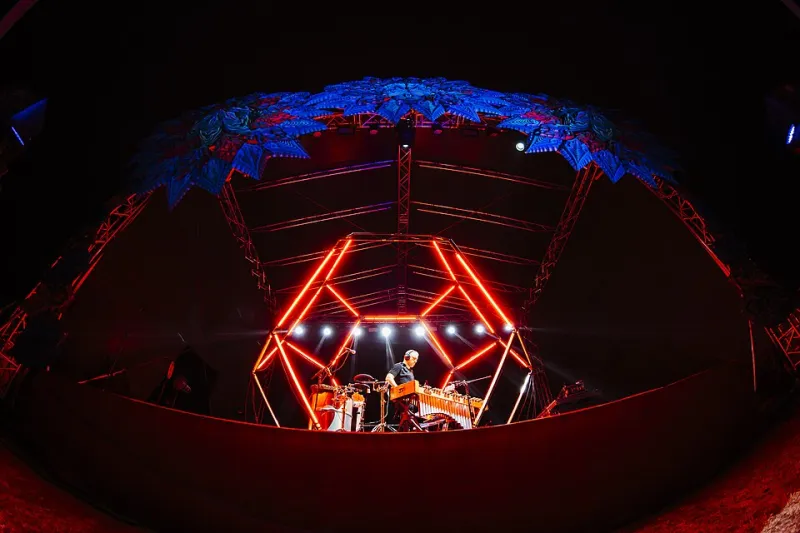
Photo: Devilz By Definition, CC BY-SA 4.0, via Wikimedia Commons
The List You Build Without Thinking
Most nights before a show, I'm not sitting down with a journal and asking myself deep questions. I'm checking mic levels, eating something I probably shouldn't, and scribbling a setlist on whatever piece of paper is nearby. Half the time it's a napkin. The choices feel practical—what flows well, what the room can handle, what I'm emotionally up for playing that night.
But here's the thing I've started noticing: when I lay all those napkins out side by side, something shows up that I didn't plan. A map. A kind of autobiography written in song choices rather than sentences.
The setlist, it turns out, is one of the most honest documents I've ever produced. And reading it backward—starting from what I'm playing right now and working toward where I started—tells a story that's almost uncomfortable in how clearly it tracks who I've been, who I'm leaving behind, and who I'm slowly, quietly becoming.
Running It Backward
Here's what I mean. If you look at a setlist forward, it reads like a performance arc—opener, build, emotional peak, closer. It's designed for an audience. But flip the timeline and look at what songs have stayed in rotation across different chapters of your career, and something else entirely surfaces.
The songs that never leave aren't always the ones that got the most streams or the most applause. Sometimes they're the ones that still feel unfinished to you—like you haven't fully lived your way through them yet. Sometimes they're anchors. Sometimes they're warnings.
I've been performing one particular song for going on four years now. It started as a breakup song. Then it became something I played when I was angry. Then it became almost meditative—something I reached for when I needed to feel grounded. The song hasn't changed. The lyrics are the same. But the reason I keep putting it on the list has shifted in ways that, when I trace them backward, tell me more about my inner landscape than any journal entry I've written.
That's the part nobody talks about when they discuss setlists. We focus on sequencing, pacing, crowd energy. We don't talk about what it means that you keep choosing certain songs over and over, even when newer material might be stronger.
What Gets Dropped Matters Just As Much
Equally revealing? The songs you've quietly retired without making a big deal about it.
There's no funeral for a dropped song. One day it's on the list, and then slowly it isn't, and you don't announce it or explain it. But when you look back and notice the moment it disappeared, you can usually connect it to something that shifted in your life. A relationship that ended. A version of yourself you stopped defending. A creative phase you quietly closed the door on.
I dropped a whole cluster of songs around the same six-month window a couple years back. At the time, I told myself it was about pacing—those songs didn't flow well with the newer stuff. And maybe that was partly true. But looking at it now, I think I was shedding a particular emotional posture. Those songs were written from a place of wanting to be understood, of performing vulnerability as a kind of plea. When I stopped needing that from an audience, the songs stopped fitting.
That's not a criticism of the songs. Some of them are still good. But they belonged to someone I was, not someone I am.
Your Current Rotation Is a Prediction
Here's where it gets genuinely interesting, and maybe a little unsettling: if past setlists map where you've been, your current rotation is quietly predicting where you're going.
The songs you're drawn to performing right now—not the ones you think you should be playing, not the ones that perform best on social, but the ones you actually look forward to every night—those are pointing at something. They're reflecting a version of yourself that's still forming.
I've been leaning hard into a few slower, more spacious songs lately. Less narrative, more atmosphere. When I first started slipping them into shows, I justified it as a pacing choice. But when I sit with it honestly, I think I'm in a period where I'm less interested in telling people what happened and more interested in creating space for them to feel something without me directing it. That's a shift in how I see my role as a performer. And it showed up in the setlist before I could articulate it in words.
That's the thing about performance choices—they often know before you do.
The Part You Can't Fake
There's a version of this exercise that's purely analytical—spreadsheet out your setlists, look for patterns, make strategic decisions. And sure, that has value. But I think the more useful version is quieter and less structured.
It's just asking yourself, honestly: Why do I keep playing that song? Not what does it do for the audience, not how does it poll on Spotify, but why does it still feel necessary to you, personally, to perform it?
And then asking the flip side: What am I avoiding putting on the list, and why?
Sometimes the answer is practical. Sometimes the answer is that a song scares you a little—that performing it would require you to be more present, more exposed, more committed to a version of yourself you're not sure you're ready to claim publicly yet.
Those are the songs worth paying attention to. The ones sitting just outside your current rotation, hovering. They're not there yet, but they're circling. And when you finally let them in, something usually shifts.
Reading Yourself in Real Time
I'm not suggesting you turn every show into a therapy session or that you need to psychoanalyze each song choice before you step onstage. That way lies paralysis, and performing is supposed to feel alive, not calculated.
But every once in a while—maybe after a run of shows, maybe when you're building a new setlist and something feels off—it's worth sitting with the list as a document about you, not just a document for an audience.
Where have you been? What are you still holding onto? What are you quietly letting go of? What's circling just outside the frame, waiting for you to be brave enough to add it?
The setlist knows. It usually knows before you do. And reading it backward, slowly, with some honest attention, might be one of the more useful things you can do as an artist who's still figuring out who they're becoming.
Which, if we're being real, is all of us—every single show.